Saturday, November 17, 2018

Number 1 Rule for Clearing Out Old Papers, Part 1


Most of the items cluttering my writing room are paper: Newspaper clippings, old magazines, marked-up manuscripts, correspondence, and samples of marketing ideas from other writers.

Magazines and newspaper clippings linger in the hope that they will give me new ideas or substantiate facts for non-fiction articles. I saved marked-up manuscripts for that impossible spare time when I could look at them to try to find a pattern in my writing problems and writing successes.

Alas, there's no room for them all anymore, so I started going through them. If I saw an idea I still wanted to explore, I either made a note of it or put the clipping in a pile of things to scan. I ruthlessly recycled all the old manuscripts; there'll never be time to go through them all, and even if there is, are the critiques still valid?

Writing styles change over time. Consider dialogue tags. The current trend seems to be to always use "said" because that word is easily ignored, thereby not distracting the reader. Yet I remember when the trend was to replace "said" with action verbs. As Kellie McGann wrote on The Writing Practice, this was due to a belief that "...people do not simply say words; rather, they whisper, yell, remark, argue, and so forth. They believe that using more descriptive words paints a clearer picture for the reader."

Stoked by this new rationale for reducing my paper load, I started weeding with a vengeance. I started losing steam in my great clearout when I came down with a weird cold in August. Realizing it was an odd time of year for a cold, I started asking around. No one was coming down with colds, but a few friends had some allergy attacks because of the rain and humidity. Since I do have a minor mold allergy, I thought that was my problem: an allergic reaction to the weather.

Fast forward three months and I was still coughing. The weather had changed, so that couldn't be it. One day my spousal unit noticed I wasn't coughing, sneezing, or blowing my nose. "Yeah, I wonder what I did right," I said, thinking it had something to do with changing my regimen of cough syrups, antihistamines, and sinus rinses. It turns out that it wasn't that at all. "You weren't clearing out your papers," he said.

Whether it was mold, paper dust, old cat dander, or plain old household dust that I was exposed to, apparently I have a dust allergy. I purchased one of those ear loop masks that people in Japan tend to wear when they have a cold. It really helped! 

So that's my number one rule: If you have ANY allergies at all, or you start to come down with a "cold," try one of those masks, also called medical masks. It will make your life much easier and is much less expensive than three months of over-the-counter cold medications and doctor visits.

And if your storage area has an evidence of mice? See Part 2 of this post, coming soon.

Saturday, December 3, 2016

Oh, Those Holiday Decorations

I'm decluttering in preparation for an eventual move. As I go through every nook and cranny of the house, I'm thinking of two things: How much would it cost me to move this, and if my new living space is a lot smaller, would this crowd out my writerly possessions?

As a writer who is inspired by the supernatural and unknown, it was really difficult for me to go through my Halloween decorations. I love those stupid styrofoam gravestones, but I had to ask: Do I know if I'll even have outdoor space for them in the new place? Even if there is space, how much will this add to the total cost of moving as opposed to buying them again for the new place?

It's December and I'm going through the same process. I really should have started a month ago, but there's still time to donate or give away decorations to people who could use them. Here are some aspects I considered.

Lights

string of Christmas lightsI had a few sets that didn't light and I couldn't figure out if the problem was a bulb or lighting. Theoretically, today's strings of lights will still work if one bulb is out. So, that should mean that there's a problem with the string and it shouldn't be used, right? Okay, but how about all those bulbs that still work perfectly fine?

Okay, assume that I took the time to go through each bulb and test it in a working string. That would take precious time from my writing. Do I really want to do that?

And even if I did, maybe combining it with another task (listening to an audio book), when would I use those hundreds of little bulbs?

And if I don't have time to go through each bulb this year, that means it gets packed and gets moved. A string of lights isn't that big, but it could take the place in the moving van of some writerly items like a book or a notebook or a package of good pens.

And the final test: How much would it cost to move them as opposed to buying new strands next year?

Yet just as I'm about to drop it in the wastebasket, my conscience kicks in and reminds me that this, this trashing of potentially repairable things, is against my commitment to the new Three R's: Reduce, Reuse, and Recycle. It's participating in our throwaway society.

So I try again. I can't get them to work. Sadly, I throw them away, and wish I knew one of those old-time tinkers who love a challenge like this.

Decorations

I don't decorate as much these days. The day job usually gets very busy after summer is over, October is usually a very busy month for Halloween-related events, and November, even if I'm not actively participating in NaNoWriMo, is the month that I really feel the need to write again.


So when December 1 rolls around, and I think of devoting writing time to hanging all those decorations and then devoting time in January to take them all down and pack them away again, I realize that I just don't have time anymore.

As I did with the lights, I consider what decorating space I might have after I eventually move. I consider the cost of moving the decorations as opposed to buying new ones. I consider my ethical problems with a throwaway society. Here, though, I have an ethical choice. If they're in good condition, I can still give them away or donate them somewhere.

But unlike lights, decorations could have emotional ties. Take, for example, that Christmas stocking that a favorite aunt made. That, I'll keep. Those ornaments I've had for years? If that's the only emotional connection, that they were part of years gone by, take a picture of the ones I would like to remember, and then give the originals away.

Yule log centerpiece by artist Roxanna Benson of Benson Art (www.benson-art.com)
What about that Yule log candle holder?  I can burn it in the fireplace at the end of Yule (or the end of December), or I can leave it in the nearby woods to gently return to nature. It would be easy enough to make a new one next year even if I've moved by then and don't have a basement or garage where I can craft things that require the use of a drill. I might even try this version on the HGTV web site that uses tea lights instead of tall candles (scroll down to the bottom).


I've probably waited too late to post this article. You're probably already tied up in the craziness of the season. Don't worry. I'll remind you next year. Decluttering, after all, is evergreen.

Yule log centerpiece by artist Roxanna Benson of Benson Art (www.benson-art.com).

Saturday, March 19, 2016

Demonic Bookcases, Part 2

Part 2 of guest blogger Kathryn Ptacek, a writer who lives in rural northwest New Jersey and shares her old Queen Anne home with lots of books, the requisite author cats, teapots, and the occasional visiting mouse.

She's tackling the most common writer clutter problem: Crowded bookcases.

Demonic Bookcases, Part 2
by Kathryn Ptacek


One of my "supervisors"
Let me back up just a bit. Before I started the decluttering, I sat down and made a diagram of the bookcases in the living room, dining room, and front hall (the last of the tall bookcases is there). I estimated how many letters could go in each bookcase, taking into account that there seem to be numerous authors with names beginning with H and M and S. They would need slightly more room. T through Z authors go out into the front hall. As I went through the shelves I found a lot of books I could put out there in the hall—they'll be dealt with later.


Shelf 1, After
After investing in many long hours of scrubbing shelves and wiping dust off books and bending and reaching and clambering up and down a stepladder, I finally finished the first bookcase. Hurray! I put back a few teapots. It's great to see some of my collection now—and truly be able to see each piece.

The next day I started work on the second bookcase (D, E, F, G, and some H). That's finished, and I set out some teapots selectively and took photos. Now, I'm about to finish the third bookcase, and I've already swept everything off the last bookcase in the living room and the one in the dining room. The one in the front hall will have to wait a while. It seems to have ended up with a massive amount of things, some of them refugees from the other bookcases. I'm going to need a bigger box, I guess!

Living Room, After
As I've gone through more books, I found some that were by A, B, and C authors, and I've set them on that bookcase. There are now about thirty of them, with no room on the shelves. That means I have to cull at least thirty books from there. Again.

Am I happy to be getting rid of some of these books? In one way, yes, because I feel a tad "lighter."  I've heard people mention that they feel they have less of a burden on them when they dispose of something, and I can understand that. But I love my books, and I am parting reluctantly with them. All this would be solved, of course, if I could just swing some floor-to-ceiling bookcases. I have a Queen Anne–style Victorian, so the ceilings on the first floor are high, and those bookcases would be huge! As it is right now, I look at the foot-plus space over the doors and windows and think about all the books that could rest nicely there. Well, perhaps if I win the lottery ... Some books, though, I'm boxing up, such as the Ellery Queen paperbacks. I want to keep them, but I don't want that multi-book series on the shelves. Is this cheating? I'm not sure, but I can't have it both ways, I guess.

Front Hallway, After
So now I hope to finish the M authors in a day or two, then move on and get to the end of the alphabet by next week. I have some deadlines looming at present, so I've had to cut back my book sorting time. (One night after I'd just started all this, I worked until 2 a.m.) On breaks, I'll head downstairs and cull a few more books for a while. It's a fun task where I don't really have to think too hard about anything.

And my goal? Not to allow the stuff to creep back onto the shelves. I want to display my collection of teapots. What's the sense of collecting something if you and your friends can't see it? That won't be easy, but I'll keep trying. The hardest thing, though, will be that when I buy a new book and bring it into the house, I know I'm going to have to get rid of at least one or two old books. But I'll manage. What's a few more books into the culled pile, right?

Of course, now I have all those boxes of shells and stones and keys to sort through ... That's my next challenge!

   
##


Kathryn's novels are now out as ebooks from Crossroad Press and Necon Ebooks. Her first collection of short stories, Looking Backward in Darkness, was released by Borgo Press in 2013. She has short stories in two recent anthologies: Fright Mare and Expiration Date.

She can be reached at gilaqueen@att.net or through her Facebook pages.

Tuesday, March 8, 2016

Demonic Bookcases, Part 1

Today's guest blogger is writer Kathryn Ptacek, who lives in rural northwest New Jersey and shares her old Queen Anne home with lots of books, the requisite author cats, teapots, and the occasional visiting mouse.

She's tackling the most common writer clutter problem: Crowded bookcases.

Demonic Bookcases, Part 1
by Kathryn Ptacek

I love books! Big, short, thick, old, new, illustrated... books, books, books! I collect them, and it shows, because I have them everywhere in my house. Every room has at least one bookcase in it, and some have as many as six or seven. Only the bathroom remains bookless.

My late husband was also a horror writer and also a book collector, and when we moved to this house, we had little furniture–but we did have dozens of boxes of books. Those numbers increased over the years, and all those volumes piled up. On the bookcases, under tables, and on the floor here and there.

Fast forward decades, and now I'm surrounded by dusty tomes, and I'm kind of drowning. I love books, but I can't have them everywhere. I especially can't have stacks on the floor where the cats and I can knock things over, or in my case, where I can trip over them.

So I decided to cull my collection. Several years ago I started working on the hardcovers in the front parlor. The fiction hardbacks are there, while the fiction paperbacks hang out in the adjacent living room; nonfiction books reside upstairs in the two offices. And the guest room. And the hallway. I boxed up a lot of books and sent them off to a fellow to sell at auction. It was one of the hardest things I've ever done.

The first time I picked up a book to put in a box, I was sure I heard Charlie's voice saying, "No, not that one!" But, yes, that one. And the one next to it, and the one under it, and the three off to the left. I sent dozens and dozens of books to the auction guy. Then I stopped working on the books, and even though I wasn't buying many, they still seemed to show up downstairs. (Could books be like clothes hangers and multiply in the dark? Possibly.) Then just a week or so ago, I was staring at the bookcases in the living room and decided I needed to alphabetize these books... and then I could get rid of some.

Living Room, Before
Another problem? An incredible number of knickknacks clustered in front of the paperbacks. It was getting to the point where sometimes I could barely see the book. Somehow, objects in my hand as I entered the living room always found their way to the bookcases. What to do with the extra key to the garage? I'll put it on this shelf so I can find it if I happen to lose the other key. Oh, well, I've just come across some interesting keyrings—maybe they should go with that extra key- just in case. Flashlights? I need them at hand in a single location for when the power goes off. Little emergency radio? Better put it with flashlights so I can find everything together. Small lantern? Goes with the emergency stuff!

Seashells? On the bookshelf! Interesting rocks found on walks? Next to the shells! What's this piece of plastic? Don't know. Put it on a shelf until I can figure out where it belongs. It's a never-ending cycle. Or so I thought.

Front Hallway, Before
Last week I grabbed some cartons and removed all the stones and pieces of wood and seashells and cat figurines and keys and teapots that had piled up over the years. Into the boxes! I'll deal with them later.

Then I started pulling books off the shelves and shifting them around. The authors with "A" and "B" and "C" last names go in this one. "D" names start on this other bookcase. Can't fit them all? Time to figure out which authors I no longer love.

It's hard to part with the books. I just might read some of these in future, even though I've only had some of these books for thirty years.

But I've hardened my heart. If I truly can't stop thinking about some classic, well, there is the library. I can't own every book, right?
   
##


Kathryn's novels are now out as ebooks from Crossroad Press and Necon Ebooks. Her first collection of short stories, Looking Backward in Darkness, was released by Borgo Press in 2013. She has short stories in two recent anthologies: Fright Mare and Expiration Date.

She can be reached at gilaqueen@att.net or through her Facebook pages.

Monday, February 8, 2016

Getting Rid of Emotionally Bound Items

When I first started decluttering, I tried going through old things first, but that was fairly useless. Some of my oldest things contain my most precious memories. I just wasn't ready to give them up.

But going through them did help me in my future decluttering. Here are some of the techniques I've used on myself. If you have others that have worked for you, please share!

Swapping Out

I lost my parents when I was relatively young. Some things that may look useless, like a plain drinking glass or an out-of-date standing lamp, are holy relics to me. My early attempts at decluttering ended up with me caressing them for a moment and then just packing them in boxes, labeling them, and putting them in the basement.


Those things are still in the basement. I've realized I can't let go of them just yet, but I'll get there. In the meantime, I look at things that have no emotional hold and say, "If I get rid of this, then I'll have room for momma's clock."

If there are things you feel you absolutely can't get rid of, tell yourself you can keep it if you get rid of something of equal size, or maybe two things that take up the same place, and then find things that don't carry an emotional attachment (like that electric pencil sharpener that stopped working and the lamp that doesn't provide the right lighting for your workspace).


Snap It

When you get to the point where you can release an emotionally-bound item, take a photo of it. Take many. Digital photos don't take up that much space! Open up a text document or grab your favorite journal and describe what it is, what you remember about it, where it came from.

Consider using an online photo service to create a book of memories.  

Tip: Make sure you back up your photos and electronic journals.

I found the act of viewing and photographing the things I release very soothing. Capturing it digitally means that I can look at it any time: I don't need to hunt for it in boxes, go to a storage area, or dig it out of the bottom of a closet. The exercise of writing about it -- which I haven't started yet -- will be even more meaningful since I'm a writer.

I'll be writing a different blog entry on releasing (getting rid of) general items later, but emotionally-charged items have another destination you might consider. Is it grandma's old sewing machine? Maybe a cousin or a friend of the family wants it. Now's the time to get in touch.

If not, and it's very old, consider your local historical society or a museum related to the item. For example -- and I'm making this up -- maybe it's an old canning set and there's a museum of food safety. If it's it good condition, they might be interested. And now that you have the photos, it's easy to send them an email and say, "Are you interested in this?" If you live in the US and you file the long-form for taxes and the recipient is a 501(c)(3) organization, you might be able to deduct the value of the item from your taxes.

If you are downsizing because you are in dire financial straits, you can sell it. Now that you have the photos, it's easy to upload them to eBay or email to people you know who might be interested in them.

Tuesday, January 12, 2016

What did I do with that?

Is getting clutter under control one of your New Year's Resolutions?


As you declutter, you will move, give away, or throw away things. Months later, you'll drive yourself crazy looking for one of those things. You might even buy a replacement for something you still own, compounding your clutter problem.

I use a To Do manager than includes a Note feature. (I use Toodledo, but you can also use just a text file or other note organizers such as Evernote or Microsoft OneNote.) I have a note called Where I Put Things.

Anytime I move or get rid of something, I make an entry for the item and its new location. For example, I might have an entry for "Electric pencil sharpener -- Donated to UU church yard sale June 2015" or "Desk fan -- over the cabinets over the fridge, way back on the right out of sight."

That allows me to move things out of the area I use for my writing, giving me more space for the things I need for writing (books, manuscripts in progress, and so on). It also saves me time when I'm looking for something. If it's not where I think I put it, I just open the note and search for the item.

So start now. When you move, give away, donate, or throw away something, write it down. If nothing else, you'll get some satisfaction seeing things on the list that you actually rehomed.


Friday, November 20, 2015

Quick tip: Candles

Some of you might throw away a candle after one use, but others, especially those who use their candles for prayers, intentions, or spells, end up with half-burned candles in a drawer or on a shelf somewhere.

I keep an old cookie tin in my desk drawer. When I don't burn a candle to completion for whatever reason, I put the stubs in the tin. Then, on my once-a-year camping trip, I use the candles to start the campfire. It's ecological (I'm reusing) and it's a sound practice spiritually.

As I throw the candles in, I think of what I've used them for. Dinner with friends? I thank the Universe that I have friends and that I can afford to share food with them. Healing intention? I thank the Universe for those who have been healed, and send good thoughts to those who could not or would not be healed. If you're not spiritually inclined, consider the other effects of a simple moment of gratitude for whatever good moments the candles represent.

I also have a shoebox where I put candle holders that need cleaning. Once a year, or when I run out of usable candle holders, I clean them out. I usually try to schedule it for months when it's warm enough to go outside to do it or at least to dump the hot water I used to dissolve the candle wax.  (See the Resources section at the bottom of the page for links to cleaning candle wax. Two suggestions -- freezing candles first and putting a little water in the holder before you insert the candle -- might even cut down on the need to clean.)

By the way, if you're fighting clutter, you should be extra careful of the fire hazard of burning candles. I'm fortunate enough to have a fireplace, so if I just want to burn a candle to scent the house, I burn it in the fireplace.

If I want to be able to see the candle and enjoy its ambiance, I put it on a fireproof surface somewhere where cats, dogs, kids, and strong winds (and curtains) from an open window can't reach it.  Make sure your surface is very clutter-free first, and that, my friend is another motivation for decluttering!

(P.S. If your mind is as cluttered as my desk, set an alarm or kitchen timer to remind you to extinguish the candle.)

Resources

This link has good information on cleaning candle holders, reusing candles and wax, and other candle-related topics.

How to Remove Candle Wax from Glass Containers

This site discusses removing candle wax from other items. I'm going to try the Dawn dishwashing liquid after I do the nearly boiling water bit (I don't trust boiling water not to break the glass) to see if I can make the process quicker.

How to Remove Candle Wax from Just About Everything

Did you know that frozen candles burn twice as long and drip less? Check this out, only if to see her cool candle holders!

Fun with Freezing Candles


Thursday, August 20, 2015

The Desk

Normally when writing nonfiction, I write top down. That is, I start with the broad and then narrow my focus. With my blog post on pens and pencils, I started this blog bottom up: I started with the tiny details and moved upward.

Why? Because so many people who try to declutter say they get overwhelmed by the big picture. Starting with pens and pencils was a way to show that you can start with the details and even a little bit at a time can make a big difference.

But now let's widen our focus. What about the whole desk?

Desk? What Desk?

If you're serious about writing, you need some space, whether it's a corner in a room, a TV tray next to your bed, or a back hall that you use for writing. If not, you'll be wasting a lot of precious writing time looking for your materials or hiding them under the bed when company comes. Still, if that's your only choice, hiding them under the bed, do it. Read this article, replacing the word "desk" with "underbed storage container" and see if that helps. Keeping all your stuff in a container that you pull out when you're ready to work is much more efficient than searching around the house or apartment for things you were working on last week. It also makes it less likely that the cat, dog, or house gnome will run off with it.

What's on Your Desk

For inspiration, writers and artists often keep things that don't traditionally belong on a desk. For example, when writing vampire fiction, I keep resin vampire figures, wax vampire teeth, and a miniature coffin or two next to my monitor. Many romance writers have adopted the idea of creating a collage for their novel (see Jenny Crusie's blog post on the collage as prewriting), something that would adapt well to other genres of writing.

There's no reason you shouldn't keep inspirational items on your desk. That's one of the things you need to do your creative work. Do you really need them on your desk? What about shelves at eye height? Or putting the paper items (photos, collages, notes) on a bulletin board? Don't like the look of cork? What about a magnetic board?

Too expensive, you say? Well, yes, a large white (or silver) magnetic board can be expensive, but there are other options. Fabulessly Frugal tells you how to turn an oil drip pan into a message center. This one, advertised on Advance Auto Parts, would work great turned on its side, but it has an embossed area that you might not like. Either search online for one that doesn't, or hang an year-long calendar printout over it.

To make space for items that you want to keep on your desk, start looking at getting rid of the things you don't need for your work, creative or otherwise. If you can move them away from your workspace, you'll not only have more room for creative totems, but you'll feel less hemmed-in, less inhibited, which might help your creativity.

At the End of Each Day

At the end of your day, whether that's 7:00 am when you have to quit to go to the day job or midnight when you have to stop so you can get some sleep before you get up for your day job, clear away things you can.

There are some creative things you can't put away (physical artwork in progress) or some things you don't want to put away (that manuscript you're editing that is open to the page where you left off), but take a good look at everything else. That book you were using for research? Are you still using it? If not, shelve it.

Your attempts won't have much effect at first, but the point is to get in the habit of going through what's on your desk. Who knows, you may find that check for your last story that you've been searching for!

Resources

Here are some useful articles to give you more ideas on what you can do to organize your desk or desk space.

From Lifehacker. Be sure to read the section called Reboot Your Office Every Evening.

Lifehacker: Streamline Your Workspace

These articles probably apply more to the day job, but you might find some of the techniques useful for home.

What Does Not Belong on Your Desk

More on Desk Organization

Monday, August 17, 2015

Decluttering, Or Getting Rid Of The Dead Weight

Today's guest blogger, author Jennifer Allis Provost, tackles the random junk in the kitchen.


Decluttering, Or Getting Rid Of The Dead Weight
Jennifer Allis Provost

As writers we tend to hold on to odd bits of minutia, whether it's a notebook of story prompts, a feather we found in the yard, or a souvenir from a trip we took twenty or so years ago.  Memorabilia's nice and all, but if we're not careful we'll end up with a house full of random junk— which is exactly what happened to me.

I've been working on my kitchen for the past few months, and anyone who's ever been in my kitchen will understand why. It's been half done for about six years, being that having twins is the single best way to lose time, funds, and motivation for home improvement projects. A few weeks ago I said to myself, "Self, this is it. By the end of 2015, I will have a kitchen I'm proud of." However, before I could tackle things like my atrocious ceiling and the half-tiled back splash, I had to deal with the clutter.

What sort of clutter, you ask? Daily progress reports from the Wonder Twins' pre-K teachers, assorted birthday cards and invitations, and enough receipts to evidence a truly debilitating shopping addiction (shoes...I needs all the shoes). But the mecca of clutter, in my kitchen at least, was the wine cabinet.

This wine cabinet was given to me by a less-than-favored in-law about ten years ago, with the explanation, "I know how much you like wine, and it was on clearance at Target." At that time I think I'd had all of three glasses of wine in my life, and hadn't liked any of them. Anyway, I accepted the gift, stuck it in my kitchen and filled it with all sorts of junk. Ironically, no bottles of wine ever made it into the cabinet, but it has housed Limoncello.

Mmm, Limoncello.

So instead of housing the intended wine, said wine cabinet ended up as the resting place of many oddities I accumulated over the course of my writing career. Within the bowels of the cabinet I found a Russian phrasebook (I took Russian in high school, along with French and Italian) that was used to assist a fellow author, a Gaelic dictionary (I taught myself Gaelic for a different project), random name tags and program booklets for 10+ years of writing conventions, and enough bookmarks to choke a horse.

Non-writerly stuff included mismatched tablecloths and placemats, keychains, half-burned candles, a crap ton of office supplies, and an assortment of odd-shaped glasses.

Yeah. Basically, it was a heap of junk.

Here's how it all shook out: I washed the glasses, and put them with...wait for it...the other glasses. I put the books on the bookshelf, the candles in the candle drawer, and recycled the program books and name tags; seriously, if I need to know who the Arisia GOH was in 2006 I'll Google it. That's what the Internet's there for. I also threw the tablecloths and placemats in the wash and then the linen closet, and added the bookmarks to my swag box. Then came the most awesome part of this project:

My husband and I destroyed the cabinet and dumped it in the trash.

The moral of this story is that not only was I holding on to things I didn't need to (for example the program books), I was also being lazy and dumping things in the cabinet rather than putting them away properly. If you want to be a successful writer, or artist of any type, a modicum of organization is necessary. And keeping a heap of junk in your kitchen is not conducive to anything but accumulating dust.

Besides, if you're going to add furniture shouldn't it be a bookcase? Now that's my kind of clutter.


About Jennifer:

Jennifer Allis Provost writes books about faeries, orcs and elves. Zombies too. She grew up in the wilds of Western Massachusetts and had read every book in the local library by age twelve. (It was a small library). An early love of mythology and folklore led to her epic fantasy series, The Chronicles of Parthalan, and her day job as a cubicle monkey helped shape her urban fantasy, Copper Girl. Her latest release, Heir to the Sun, was released June 1, 2015 by Bellatrix Press. Her next release, Changing Teams, will release November 10, 2015 from Limitless Publishing. Find her on the web at http://authorjenniferallisprovost.com/.


Monday, July 27, 2015

What I Learned from the Yard Sale

To improve your success at yard sales/garage sales, you have to analyze what sold and what didn't. Then you have to decide whether the problem was the price, the presentation, or the audience.

I think my presentation was good. I had a nice green sheet on the table which showed up the items. I accidentally took the smaller of two tables I own, which means things were crowded, so next time I'll bring the larger one.

The night before I made three flyers to hang on the table showing pictures of groups of items (that's what you saw in the last post), but I ran out of time to make small signs for the table. Fortunately, I have decent penmanship and can spell, so I just made some on-site. However, I didn't allow enough time to do that before the crowds started arriving, so next time I need to either make them before or arrive earlier.

It was supposed to be a nice day, so although I had a 10x10 EZ-Up in the car, I didn't bother to put it up at first. Later, though, when the sun shifted my way and the metal objects on the table started getting hot, I set it up. This meant, though, that people weren't browsing my items while I struggled — at first, by myself, then with other lovely people who took pity on me! — to put up the pop-up. Next time I'll do it at the beginning, no matter where I end up. The customers appreciate the shade, too.

So what sold? Used, cheap costume jewelry. Some lawn decorations. The Donvier ice cream maker.

What didn't sell? Vintage. This particular crowd wasn't looking for vintage that day. Or books, even though I heard they went like hotcakes at prior events. Or albums (vinyl).

What did they ask about? Craft items. Mens' jewelry. More rings.

Funny, but as I sorted out the stuff I took home, I thought about how similar selling at a yard sale is to submitting a short story or novel for publication. Not everyone will want what you have, or maybe they will, but not when you're offering it. Don't get discouraged; just find a different yard sale. Or sell something different.

Friday, July 24, 2015

Decluttering in Action: Yard Sale 7/25/15 in Winchendon, MA

The Unitarian Universalist Church in Winchedon, MA is holding their massive vendor and yard sale on Saturday, July 25, at 126 Central Street, Winchendon, from 9 AM until 1 PM.

In addition to their usual yard sale, they'll have vendor tables with fresh produce, locally made craft items, and plenty of bargains.

I'll have a table with the following items and more!


Retro scarves (all polyester) from the 1970s including one that says it's a Peter Max design.

Morris the Cat memorabilia


Data General ephemera
Computer memorabilia from the 1970s including flowcharting templates and punch cards!

Antique Table Talk Pie tin pans

Retro unicorn and gnome keepsake boxes

Retro long evening wear gloves from the 1960s and early 70s. Polyester, of course!


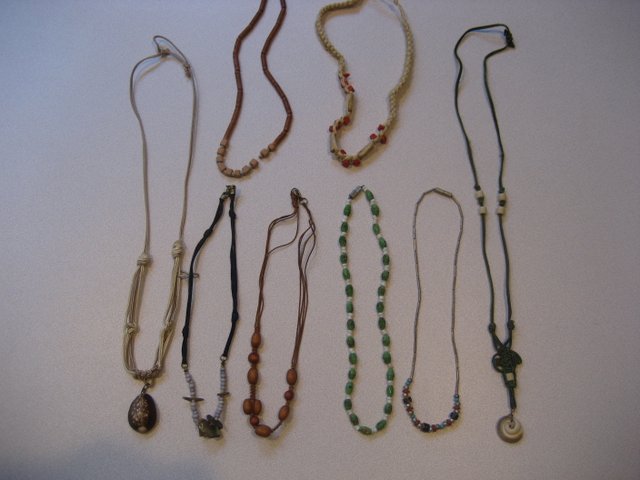
Retro 1970s choker necklaces.


A cobra car insignia that may or may not be a Shelby Cobra insignia.


Ladies' handkerchiefs. Perfect for crafting.

Donvier Ice Cream maker, with instruction/recipe book

Vinyl (record albums)  from the 60s and 70s. No guarantee on the condition.


Novels by local author, set in Framingham


Thursday, July 23, 2015

Throwback Thursday: No Progam is Perfect

Decluttering, that tedious job of going through everything you own to weed out the things you can release and the things you can retain, does have its moments of pleasure. Maybe you'll find that pocket knife or earring that you thought you had lost forever. Or maybe you'll find evidence of a civilization long gone; that is, your early years.

Today I found two printouts from an early computer job. When I say early, I mean that one printout is on perforated paper, printed with a dot matrix printer. The other is a photocopy of something typed on, I believe, an IBM Selectric typewriter.

The printout from the dot matrix printer is a poem called "The Perfect Programmer." It doesn't say who the author is, so I searched the Internet. The HP Calculator Archive attributes it to Lou Ellen Davis, having appeared in "65 Notes," January 1977, Volume 4, Number 1, Page 1.

In the April 4, 1983 edition of InfoWorld, the poem appears on page 50, but with no attribution. The poem, apparently very popular, appears again in 2009 on page 220 of Classical Fortran: Programming for Engineering and Scientific Applications by Michael Kupferschmid.

I wanted to know who Lou Ellen Davis was. Was it a woman? Was she one of the first females in the field? Was it a man whose middle name just happened to be Ellen? Did he/she publish other poetry?

Alas, I didn't find an answer and I really should get back to decluttering. But I'll leave you with my favorite stanza:

He died at the console
Of hunger and thirst.
Next day he was buried
Face down, nine edge first.

And for a clue why that particular stanza tickled my geeky little heart, I look at what I also found while going through old clutter:


Yup, an old IBM punch card. In the early days, a programmer (later it would be a keypunch operator), would punch them up on a clunky machine similar to an old teletype. Later these machines would be replaced by a computer terminal connected to a device that would do the actual punching.

Either way, when you finished punching one per line for each line of the computer program, you'd load the cards into a machine that would read them into the computer that would run the actual program.

You had to load them a specific way for them to be read, much like you have to load a printed page in a printer to manually print on the other side. With these punched cards, it was always the same way...

Yes, you guessed it: Face down, 9-edge first.

For more info, see this article on Wikipedia:
https://en.wikipedia.org/wiki/Punched_card

Wednesday, July 22, 2015

Faux Decluttering

Today's guest blogger, author Catherine E. McLean, describes her secrets on how she tames clutter in a tiny working space.


Faux Decluttering               
by Catherine E. McLean

I bet you read the title of this piece and thought, "faux" means "fake," so how does one fake decluttering? Clutter is clutter.

Okay, so we writers are sometimes packrats, if not bona fide hoarders. Especially when it comes to juicy tidbits that spark our imagination. We find research so fascinating that we make copious copies of it to keep. And we constantly hear that little devil's voice whisper into our ears, "You'll need it one day."

I am fortunate to have an office in my home. Okay, in reality, it's a glorified closet— eight feet wide by sixteen feet long. The door at the end faces a small window on the opposite wall. Yet, in this space is a big four-drawer desk, a file cabinet (vertical, four letter-sized drawers), a work table for the cutting board and typewriter, my desktop computer, its tower and monitor, two printers, and six bookshelves. My office chair has just enough room to swivel from the desk to the computer station and back. Not quite a knee-knocker turn.

Of the six bookshelves, three are a foot wide (originally they were video towers. Two were placed to form a square base against the back corner wall. One unit is fastened on top of the two, allowing for more books, and a little shelf space— for the alarm clock and Office Minions (cute knickknacks, like a space alien reading a story to a robot).

The three video units, plus the other narrow bookshelf house forty "keepers," the books on writing craft. The books are the top picks out of the four hundred that I have studied. They're handy references when a fellow writer has a question or wants a definitive source on an aspect of writing fiction.

The computer desktop was originally a kitchen countertop, one that had been ordered but, because of an error, was too short. I wasn't letting something that nice go to waste. So, I had shelf units built to the correct ergonomic height for my keyboard, which means I work comfortably at the computer for hours on end.

Those shelf units hold my enormous American Heritage Dictionary and my thesaurus, manuals for my office equipment, and boxes of clipped "settings" (scenic pictures from calendars and magazines like National Geographic). After all, a picture is worth a million words.

Also stored (that is, crammed) into my office space is my writer's "stuff." It lines the walls and tops of bookshelves. Yet, the secret to keeping my office ergonomically unfatiguing and efficient comes from a kitchen remodeling workshop I once attended. The secret is— work centers.

In essence, my office is arranged into work centers. My desk is for the business of writing. My computer station is for creating tales. Everything for the printers and printing is on the bookshelf next to the printers. I don't get out of my chair to reach the reams of paper, card stock, address labels and business card blanks, brochure papers, etc.

When I turn around from my computer, I face the largest of the bookshelves. It holds bulging three-ring binders, half have four-inch spines. Those contain my story worlds. Stacked on top of the bookcase are more binders— copied information, each one on a specific story element, to help me put the story together, revise it, do the synopsis, etc.

The space under the cutting table's legs shelters three old cardboard file drawers sitting side by side. One drawer holds the overflow from the file cabinet. Another holds clear plastic envelopes (within are hard copies of stories that came to life but are missing elements, which keeps them in limbo, at least for now).


The third file drawer holds an assortment of miscellaneous stuff— like inspirational mottoes that can be pinned on my walls. (No mottoes have to do with being neat or tidy!)

Other "work centers" include a drawer of CDs— backups of the computer's story files. You see, I don't believe in "the cloud" for backups or storage. Computers crash when least expected. Nature and hackers are a threat.

All right, I'll confess. I have an external backup drive. Trouble is, I don't trust it either.

Another work center is the vertical file cabinet. One and a half drawers house correspondence (a lot of it decades old, which I really should purge). The other drawers contain alphabetic files of information on subjects like animals, food, runes, weapons, etc. Such material brings stories to life because I can see pictures as well as read descriptions.

Now you're thinking all I've done is organize my office. No, sorry, it's still cluttered because things are stuffed, crammed, and compressed into containers, which are haphazardly stacked, shelved, or hidden in drawers.

But, you know what? That's faux decluttering at its best!


About Catherine
In addition to being a wife and mother, Catherine has ridden and exhibited Morgan Sport Horses. She is an avid clothing and costume designer, an award-winning amateur photographer, a 4-H leader, and a Red Hatter who loves bling.

Catherine lives on a farm nestled in the foothills of the Allegheny Mountains of Western Pennsylvania. In the quiet of the countryside, she writes fantasy, futuristic, and paranormal stories where a reader can escape to other worlds for adventure and romance.

Book Launch

Love, vengeance, attempted murder, and a bomb . . .  No reason to panic.

Join Catherine for an online Release Day Celebration at the HEARTS AKILTER BLOG,  1-5 p.m. EST on August 5, 2015.

Participate in the Release Day Celebration and get a chance to win a $50 gift card giveaway and other prizes. See the Release Day Celebration page for more information.

Monday, July 20, 2015

I *Told* You I'd Need That Someday!

Face it, it's gonna happen. You'll give away, recycle, sell, or toss an item and immediately need it.

Recently I gave away almost every plant pot I owned, especially the smaller ones, because it's futile to try to garden with a back yard overrun with groundhogs, rabbits, squirrels, and chipmunks, and I'm not good at remembering to water a container garden.

Of course, I had forgotten that package of cilantro seeds — what did I say about memory? — that I had purchased because I didn't want to be throwing away nearly a whole bunch of store-bought cilantro every time I made guacamole.

Rather than buy more plant pots, I drilled holes in the bottom of used plastic cups I scavenged from a friend at a cookout.

After looking at the results, I thought maybe the clear plastic would focus the sun's rays on the poor roots and bake them, so I placed them in a paper coffee cup. When the cilantro is ready to transplant into the pots that I didn't give away, I'll simply rinse and recycle those temporary planters. Depending on the shape that the coffee cups are in, I'll either recycle or toss.

About a week later, Dear Hubby asked to borrow my spare insulated lunch container, the one he had urged me to get rid of since I had two others. Well, I had gotten rid of it, and the two I had left were the girly purple one I bought when my grey one leaked when carrying ice. He double-bagged the ice and used the grey one. It worked.

So, yeah, you'll give something away and then discover you need it. It's just the Universe messing with your head. The Universe is like that. You'll survive.

Wednesday, July 15, 2015

Why Can't I Find Things?

While you work on stopping — or at least slowing down — the accumulation of items, let's look at why they are never where you expect them to be.

There's No Place to Put Things
You need to get rid of some things or you need to find a bigger place. Or both. This blog will try to address both, eventually.


For now, pick one area that's a real problem for you. Clothes? Remember my comment that some people keep buying tee shirts when they already have enough to clothe a third-world country? Maybe you think that's not you.

Okay, try this. Go through your room, apartment, house, whatever, and grab every tee shirt you own, clean or dirty, and put it on the kitchen floor. (Uh, maybe you should vacuum first?)

Make only two piles: Clean and dirty. (Yes, I want you to go through your laundry bag.) Look everywhere: Your dresser drawers, your closets, your gym bag, your suitcase, under the couch, behind the couch  — everywhere. Don't stop until you've made sure that you have every last one. And don't just eye the closet. Pull everything out! Open boxes! Look on hangers.

When you're finished, count the total number of tee shirts in both piles. Now, if you wear a clean shirt every day, how many days of clean tee shirts is that? A week's worth? A month? A year?

How many still fit? How many still fit well? How many are faded, stained, ripped? Why are you keeping them? If they're faded, stained, or ripped, but they have strong emotional ties, here are some ideas:
  • Take pictures. You're going to hear me say this a lot, but it's true. Take pictures and write a description of where you got each one, when, who you were with (was it the first time you went to a concert without your parents?), and any other interesting details. If you're a writer, maybe you want to describe the fabric, the color (the color in photos isn't always  true), how it felt (was it thick cotton, or a soft blend?), maybe the size or style (was it back when shirts ended at the waist, or mid-thigh?).
  • If you're good with photo manipulation programs, make a cool collage of the tee shirts. Post it on your web site or Facebook page. Or print it out and see if it can stir a remembrance or inspire a short story.
  • Know someone who's crafty? Are you crafty yourself? Cut out the good bits and make a quilt or pillow. Check out these cool ideas from Instructables. Or cut out the best part of the tee shirt and make it into an applique for a canvas tote bag. Stretch it over cardboard or frame it.
Now you're down to those that aren't faded, ripped, or the wrong size. Is it still a manageable number?

You Misplace Things Because You're Too Scattered
You have triplets, two jobs outside the home, and you're the president of the local writer's association. You exercise two hours a day and make meals from scratch. Your wife's mother is staying with you while she recovers from hip surgery. Sounds like you need to declutter your schedule. Start thinking about that. I've got some ideas on that for later.

You Keep Misplacing Things Because You Don't Have a System
Unfortunately that annoying adage we heard as a child, "A place for everything, and everything in its place" does have some value. Maybe you never bothered with getting organized before because you knew where everything was.

Well, that was before: Before you had enough income to buy Stuff. Before you had a million other things crowding your mind that were more important than where you put the pack of pens. Before you started getting — ahem  — older, and lost that wonderful memory that you had as a young adult.

You're the Only One in Your Household with a System
If there is more than one of you in the household, maybe you're not the problem. Maybe you have a perfect system, but no one else follows one. Maybe you're the one who picks up after everyone.

I once heard a mother say that she made her teenager's bed because her daughter "didn't do it right." I'm not a mom, so you'll probably laugh at what I'm going to suggest, but I'm going to suggest that you make them do their part and you put up with the bed not looking exactly perfect or them not always remembering which drawer the screwdriver goes in. If they don't get in the habit now, you're giving them the gift of being a clutterbug when they leave the family home. I doubt they'll thank you for that.

I know, I know, it's hard, so hard, being a parent. You've got a lot on your plate. But if you keep doing things for your child, you're adding more to your own plate and you're making it harder to keep things under control. Just try to get them in the habit, and don't stress if you're not successful. Baby steps.

If, on the other hand, you're a parent who has dealt with this successfully, maybe you could leave some tips or suggestions in the Comments at the bottom of this page. I know some of you must have found a system that helps.

You Just Can't Throw it Away
Maybe the main reason you can't find anything is just that you have too much stuff because you just can't throw it away.

I came to some of the same conclusions that Justine did in her guest post The Socioeconomics of Clutter, though I'm sure I won't relate them as eloquently. Did your father "come from poor" and your stepmother raise five children during the depression? Did you pick up the packrat-itis from them because they drilled it into you with "You never know when you'll need it"?

This one is a hard one to deal with. Some of the ways I'm dealing with it is by being realistic, a suggestion from Dear Hubby. Let's say that I discovered that I have 71 pens in the house. I'm a writer, so it's realistic to assume that I will always need a pen one day. But how long does a pen last? (If you want, do an experiment: Use only one pen, a new one, which you mark with tape so you know which one it is. Keep it in your pocket or bag. How long does it last?)

Let's just say a pen lasts a month. That's 12 per year. Those pens will last you almost SIX YEARS. What will be the condition of the ink at the end of six years? Will it flow smoothly, or be so sluggish your hand cramps while you drag it across the page? What are the chances that some new pens will come out, some that you are dying to try, that flow better, fit in your hand better, or have some new feature we can't even dream of now?

Maybe the reason you can't throw things away is that you're living in the past. When you grew up, there weren't many shops nearby, and they were closed on Sundays. There was no online shopping with next-day delivery and mail order took forever. So you keep a stash of all-occasion cards just in case you forget to buy Aunt Tilly a birthday card and the shops are closed. You keep fancy paper and blank notecards because long-distance phone calls were too expensive and that was the only affordable way to keep in touch with friends and family. Or maybe you had three small children and it was just too much to try to get out to the mall or walk to the convenience store.

How many of those reasons are still true? Maybe there's an all-night drug store nearby. Maybe Aunt Tilly prefers Jacquie Lawson e-cards now. Maybe you rarely write letters or notes and the designs and colors of the ones still in your possession turn your stomach. And the young children you had to drag out to the store are now in high school.

Is it that the things you're keeping have an emotional connection, like with the tee shirt from your first concert attendance? Maybe your mother died when you were young. Or maybe you lost a sibling at an early age, and those toys are your only memory because people didn't take as many pictures back then or you lost your pictures during a flood or a move. Or maybe you lost your partner and the smell of him/her still lingers in that ratty old bathrobe.

Those emotional attachments are hard to deal with. Years ago I tried a major decluttering project and failed because I tried to attack those hard-to-release items first. My emotionally connected items are still in boxes in the basement. My new approach is to deal first with the things that have no connection so that I'll have room for the things that do. And at some point, I'll have to even give them up.

For now, I'm starting with the easier things.

The Gnomes Got 'Em
Suspect gnome infestation if things suddenly disappear and reappear. For example, you can't find your reading glasses in your office. You walk out to the kitchen to get coffee, come back, and they're just where you thought they should be. The gnomes got 'em and they're messing with your head. They love aggravating humans like that. So do cats.

Friday, July 10, 2015

Stop Buying Too Much Stuff

So maybe you understand a little more about why you have so much clutter, but what can you do to deal with it?

Here are some possible solutions to buying too much stuff, one of the problems I mentioned in Pens, Morven, Really?

eBay and Overstock.com

Stop it right now. Block those web sites if you have to — There are extensions for your browser and I'm sure there are apps for your phone. As I said when talking about the Mall later in this post, it doesn't mean you can't do it forever, it's just that you can't do it now.

The Home Shopping Network
Is that still even on? Whenever the cable company updates the line-up, the first thing Dear Hubby does is to "hide" the channels we don't want. The Home Shopping Network and its kin are among the first to go. This makes it quicker to find what we want when browsing through the channels. There's a side benefit in that it prevents you from accidentally landing on that channel and getting interested in what's on sale. Find out how to hide channels on your cable setup. If you can't figure it out by "walking" through the menus, do an internet search. You're not the only person who's wanted to do this.

Offers in e-newsletters
Create a special folder for all incoming salesy newsletters. If your email program or app allows you to make rules, you can set it up so your newsletters go there automatically. If not, anytime one arrives, just move it to the new folder without reading it. Yup. Until you get things under control, don't look at it at all! Remember, it's not forever; it's just until you get things under control, which is an excellent incentive for being serious about decluttering. Why didn't I tell you to delete it? If  you're like me, you think, "Oh, but there might be something in there I really need!" You're more likely to put it in another folder where you can get it if you need it than you are to delete it.

The Mall
Okay, the Mall is a great place to do your daily fitness walk during inclement weather, but walk right past those stores! While you're in your decluttering phase, you've got to do that! It's like avoiding carbohydrates completely during the Induction phase of the Atkins diet. Complete abstinence is temporary. It doesn't mean you can never go into those stores again, just don't do it until you get a good idea of what you have and where you can fit it.

Buying Too Many Gifts
Are you one of those people who buy birthday, anniversary, Valentine's Day, Christmas, Hannukah, and Easter gifts for everyone you know? That means you have gifts, wrapping, and cards stashed away, doesn't it? And you can't always find them (or remember you bought them), so you buy more.  And your friends and family reciprocate gifts, buying you things you might not have room for, right? At some point you need to review — with your family/friends — who you'll exchange gifts with and what kinds of gifts they'll be. More on that later. You can start by saying, "Please no gifts. I'm trying to declutter." Or ask for non-physical gifts: Vouchers for movie coupons, gift certificates for a restaurant, a donation to your favorite charity.

Coming Back with More
If you or a family member have the problem of going to the local Swap Shop and coming back with as many items as you dropped off, try this technique. For every one thing you get from anywhere — shops, online, giveaways, gifts — you have to get rid of two. Or three.

No, it won't make a major impact in your pile of stuff, but it can help you stop accumulating more while you get a handle on what you have.

Think of it every time you buy or grab a freebie. Free promotional bags at the Farmer's Market? Fine, but think of the ones you already have and which ones you're going to give away. Get in the habit of doing this with little, inconsequential things so that you naturally think of what you already have and what you'll do with it any time you're about to acquire another item.

Buying Things You Don't Need
This takes some self-control, but, at least for your major decluttering time period, stop buying things you don't need.

Example: You see the greatest-ever tee shirt. You already have enough tee shirts to clothe a third-world country. Do you absolutely need another tee shirt now?

Another example: The latest Apple watch is out. You have a watch (maybe even a smart watch). You have a cell phone. There are inexpensive watches available for under $30. Do you absolutely need the latest smart watch now?

Defer your purchase until after the decluttering phase. Get your stuff under control before you make any other non-critical purchases. Get comfortable with the difference between need and want.

Tuesday, July 7, 2015

The Socioeconomics of Clutter

Maybe your personal space is cluttered because you just haven't had the time to declutter, but maybe there are deeper reasons. In the second of my guest blog posts, Justine Graykin, Writer and Freelance Philosopher, muses on the connection between clutter and socioeconomics.

The Socioeconomics of Clutter
by Justine Graykin
justinegraykin.wordpress.com

I have a theory: Clutter is directly related to how much money you have.


It's not that poorer folks are necessarily messier than rich folks.  It's just that they have a harder time throwing stuff away.  After all, you might need it.  It might be useful someday.  And you might not be able to afford a new one.

When money is less of an issue, you don't worry about throwing away something potentially useful.  You can always buy another.  And chances are, you have a bigger house anyway, with more places to store your stuff.  Including all your kids’ art projects and report cards, and your dad's collection of WWII memorabilia.  Run out of room?  No problem.  Get a storage unit.  Get two.  Get a second home to fill with the spillover from the first. 

Is your clutter getting disorganized?  Tired of dusting all those tchotchkes (I love that word!) that you've collected?   Hire somebody to take care of it all.  Or pack it all up and donate it to charity.  Makes a great tax write-off.

But when your income does not include a surplus for housekeepers, storage units and second homes, or when you've endured a long stretch of poverty that has ingrained the hoarder's habits, it's tough to throw stuff out.  You save it for a rainy day.  You think, "Someday I'll be very glad I held on to this."

There are those houses you pass with cluttered yards.  When you're poor, and you need to keep that car, that mower, that appliance, running for as long as possible, and you need to fix it yourself because you can't afford repairs, you keep a lot of spare parts around.  Get a new (probably refurbished) washer?  Better keep the old one.  Might be some useful parts in it. 

Eventually, all those potential sources of parts (or maybe they could be fixed when you get around to it) sit in the weather for too long and disintegrate into junk.  But then what do you do with it?  Can't take it to the dump.  The dump charges you for the disposal of large items.  Towing away all those junk cars would cost money.  So there they sit, slowly becoming part of the landscape.

And giving the neighbors fits.  "The place is an eyesore!  Why don't they get rid of all that unsightly clutter?"  I'm betting the income of those who complain is higher than those they complain about.

So, writers.  Writers accumulate stuff just like everybody else.  Probably even more so, because writers are notoriously eccentric.  So what they collect, on top of all that potentially useful debris, is eccentric.  Writers also tend to be a sentimental, sensitive lot.  Goes with the territory.  So they keep the origami rose their youngest child made for them, the first draft of their first ever published novel, the cups from the BarFleet party at Arisia, the model of a real castle picked up in Scotland, MLP figures, business cards of every single person they ever met at a convention, mouse skulls, butterfly wings, sea glass, plant pots, pressed leaves and flowers, silver streamers from the Blue Man Group concert,  bookmarks, a handmade change purse from Mexico with Dia de los Muertos figures on it, and crates of books they'll probably never (but they might!!) read/reread.

And, of course, pens.

Now, none of this would be a problem if writers earned lots of money for their work.  They'd just get nice display cases for their eccentric stuff.  And as for the pens, well, who needs pens, anyway, when you've got all the latest devices?  Oh well, maybe to sign those books for fans.  But you have that deluxe gold pen you were awarded at some posh ceremony or other.  Keep that of course.  The rest?  Pitch them.  You can always buy more.

Writers, however, do not earn buckets of money for their work.  So, clutter.  For all the reasons of clutter.  And decluttering?

Good luck with that.

Friday, July 3, 2015

Does Decluttering Take a Holiday?

Does decluttering take a holiday? No, not if you're trying to establish a habit of keeping everything in its place, but we haven't gotten that far in this blog. At this point we're just trying to figure out why everything is so cluttered and how even little bits help.

So, if you're in the United States and planning something to celebrate the Independence Day (Fourth of July) holiday, yes, you can give yourself some time off.

But if you're not going away, or hosting guests for a cookout, this is a good weekend to declutter because you might actually have time for yourself. Is it hot out where you live? Don't try going through the stuff in the attic; look in your basement (if you have one) or back yard (if you have one).

Do you have a laptop and somewhere cool to go? Now would be a good time to sort through electronic clutter. (Can I coin the word e-clutter, or did someone beat me to it?) Going through photos is a good choice; it's like revisiting the places you've been. Just make sure you back them up to something first. It's easy to go a bit heavy with the Delete key or accidentally delete the wrong folder. Get rid of duplicates or terribly out-of-focus ones. You'll need the space later when you start photographing the things you are releasing from your possession.

And then, next Tuesday, when you're back online, read the upcoming blog post I'll release by writer Justine Graykin, who also has some insightful thoughts on who clutters and why.

Wednesday, June 24, 2015

Paperwork, Be Gone!

I don't have all the answers; there are still many de-cluttering problems I haven't figured out yet. So, being the crowd-sourcing type of person that I am, I reached out to the broader writing community to find out how other writers handled their clutter problems.

Sometimes you just can't do it alone. Writer Loren Rhoads found her answer in a professional organizer.

Paperwork, Be Gone!

by Loren Rhoads

For 10 years, I edited Morbid Curiosity magazine.  It collected true first-person essays, which I published annually in the spring.  The last issue appeared in May 2006, after which I collected my favorite essays into an anthology published by Scribner in 2009.

During the magazine years, I kept a paper copy of every draft of every submission I’d ever received, whether I eventually published it or not.  I kept every web page I’d printed out as research.  I kept reams of correspondence, particularly from difficult would-be contributors and/or all the prisoners who’d ever gotten in touch.  I kept copies of every invoice I sent and resent to the deadbeats who wouldn’t pay for the magazines they’d ordered for their shops or distribution schemes. Most of the paperwork was in rough order, but there were duplicates and redundancies and stuff I just didn’t need any more.

It felt like, to use the vernacular, an epic heap of fail. I told myself that I couldn’t tackle it, because there was no way to overcome it by pecking at it an hour or two at a time, as watching my daughter allowed.  The real truth was that I didn’t want to wallow in all the unhappiness, bad memories, and feelings of inadequacy the paperwork represented.  My magazine was a success, in that it was beloved and developed its own cult.  I just wasn’t as successful at the business of publishing it.  I naively wanted to believe the best of distributors and shop owners, especially if they were enthusiastic and complimentary. I didn’t want to look at the record of my struggles.

Luckily, a friend of mine started a business as a professional organizer. I hired her to come by one day to help me master this disaster.  It was the best money I’ve ever spent.

On that magical day, Lilah went through all seven boxes of papers, as well as the four jammed file drawers, without judging, reading anything, or becoming involved in any of it.  She made piles for me: one for each issue, with reviews, ephemera from the readings, photographs, and fan letters.  I decided to pull out the best parts of those piles and make a scrapbook, so I could look at my triumphs when my spirits needed a boost.

She also made piles of each year’s receipts and invoices.  Filing that stuff away was the best experience of my life. The unpaid invoices went into the tax paperwork, never to be looked at again.  When the IRS’s suggested length of time passes, I’m going to pitch those files in the bin without even opening them. 

Lilah made a pile of edited manuscripts, any hard copy illustrations that the artists hadn’t wanted back, and advertisements for each project.   Among that stuff were the rejected manuscripts or things I’d started to edit before the contributors became too challenging to deal with.  I simply threw those things away.  Now I can forget the people who were mean to me when I dared to edit their deathless prose. Every time I recycled a sheaf of papers, laughter bubbled up out of my chest.  I said over and over, “YOU are out of my life.”

In the five hours Lilah and I worked together, I managed to throw out three full boxes of paper.  We whittled the keepers down to three boxes and a file drawer, along with two miscellaneous stacks that I needed to read more closely before recycling them.

Two weeks after the organizer came, I finished. My curbside recycling bin was crammed full two weeks in a row, but the purge has been very healing.  I cannot believe the feeling of liberation in culling all this stuff.

In the end, I can forget the frustration and depression and anxiety that marred the triumphs of my publishing business.  I only want to remember the good parts of running the press.  I have thrown all the bad memories away.

I know it can be intimidating to turn your paperwork over to someone else to handle, but trust me, they will be working too fast to judge.  Because there’s no emotional baggage for them, they can be efficient and ruthless.  Unless you empower them to actually throw things out, you will still be able to make the final call and rescue anything you need to.  However, once of the worst of the organization is done in macro-scale, the little decisions are easier to make.  Throwing things away takes on a momentum of its own.

If you aren’t lucky enough to have a friend who is starting her own business, there are professional organizers who can be hired.  More basic than that, you could hire a high school kid or trade organizational chores with a friend.  Anyone who isn’t emotionally bound by your paperwork is an ally. Agree first what the payment will be, how long you will work, and when you will take breaks. Then pull up your recycling bin and get to work.


 Loren Rhoads is the author of the space opera trilogy In the Shadow of the Templars. The Dangerous Type comes out on July 7, 2015, followed by Kill By Numbers in September, and No More Heroes in November. You can learn more about the series at http://lorenrhoads.com/writing/the-dangerous-type/ or Morbid Curiosity magazine at http://lorenrhoads.com/editing.