Monday, February 8, 2016

Getting Rid of Emotionally Bound Items

When I first started decluttering, I tried going through old things first, but that was fairly useless. Some of my oldest things contain my most precious memories. I just wasn't ready to give them up.

But going through them did help me in my future decluttering. Here are some of the techniques I've used on myself. If you have others that have worked for you, please share!

Swapping Out

I lost my parents when I was relatively young. Some things that may look useless, like a plain drinking glass or an out-of-date standing lamp, are holy relics to me. My early attempts at decluttering ended up with me caressing them for a moment and then just packing them in boxes, labeling them, and putting them in the basement.


Those things are still in the basement. I've realized I can't let go of them just yet, but I'll get there. In the meantime, I look at things that have no emotional hold and say, "If I get rid of this, then I'll have room for momma's clock."

If there are things you feel you absolutely can't get rid of, tell yourself you can keep it if you get rid of something of equal size, or maybe two things that take up the same place, and then find things that don't carry an emotional attachment (like that electric pencil sharpener that stopped working and the lamp that doesn't provide the right lighting for your workspace).


Snap It

When you get to the point where you can release an emotionally-bound item, take a photo of it. Take many. Digital photos don't take up that much space! Open up a text document or grab your favorite journal and describe what it is, what you remember about it, where it came from.

Consider using an online photo service to create a book of memories.  

Tip: Make sure you back up your photos and electronic journals.

I found the act of viewing and photographing the things I release very soothing. Capturing it digitally means that I can look at it any time: I don't need to hunt for it in boxes, go to a storage area, or dig it out of the bottom of a closet. The exercise of writing about it -- which I haven't started yet -- will be even more meaningful since I'm a writer.

I'll be writing a different blog entry on releasing (getting rid of) general items later, but emotionally-charged items have another destination you might consider. Is it grandma's old sewing machine? Maybe a cousin or a friend of the family wants it. Now's the time to get in touch.

If not, and it's very old, consider your local historical society or a museum related to the item. For example -- and I'm making this up -- maybe it's an old canning set and there's a museum of food safety. If it's it good condition, they might be interested. And now that you have the photos, it's easy to send them an email and say, "Are you interested in this?" If you live in the US and you file the long-form for taxes and the recipient is a 501(c)(3) organization, you might be able to deduct the value of the item from your taxes.

If you are downsizing because you are in dire financial straits, you can sell it. Now that you have the photos, it's easy to upload them to eBay or email to people you know who might be interested in them.

Tuesday, January 12, 2016

What did I do with that?

Is getting clutter under control one of your New Year's Resolutions?


As you declutter, you will move, give away, or throw away things. Months later, you'll drive yourself crazy looking for one of those things. You might even buy a replacement for something you still own, compounding your clutter problem.

I use a To Do manager than includes a Note feature. (I use Toodledo, but you can also use just a text file or other note organizers such as Evernote or Microsoft OneNote.) I have a note called Where I Put Things.

Anytime I move or get rid of something, I make an entry for the item and its new location. For example, I might have an entry for "Electric pencil sharpener -- Donated to UU church yard sale June 2015" or "Desk fan -- over the cabinets over the fridge, way back on the right out of sight."

That allows me to move things out of the area I use for my writing, giving me more space for the things I need for writing (books, manuscripts in progress, and so on). It also saves me time when I'm looking for something. If it's not where I think I put it, I just open the note and search for the item.

So start now. When you move, give away, donate, or throw away something, write it down. If nothing else, you'll get some satisfaction seeing things on the list that you actually rehomed.


Friday, November 20, 2015

Quick tip: Candles

Some of you might throw away a candle after one use, but others, especially those who use their candles for prayers, intentions, or spells, end up with half-burned candles in a drawer or on a shelf somewhere.

I keep an old cookie tin in my desk drawer. When I don't burn a candle to completion for whatever reason, I put the stubs in the tin. Then, on my once-a-year camping trip, I use the candles to start the campfire. It's ecological (I'm reusing) and it's a sound practice spiritually.

As I throw the candles in, I think of what I've used them for. Dinner with friends? I thank the Universe that I have friends and that I can afford to share food with them. Healing intention? I thank the Universe for those who have been healed, and send good thoughts to those who could not or would not be healed. If you're not spiritually inclined, consider the other effects of a simple moment of gratitude for whatever good moments the candles represent.

I also have a shoebox where I put candle holders that need cleaning. Once a year, or when I run out of usable candle holders, I clean them out. I usually try to schedule it for months when it's warm enough to go outside to do it or at least to dump the hot water I used to dissolve the candle wax.  (See the Resources section at the bottom of the page for links to cleaning candle wax. Two suggestions -- freezing candles first and putting a little water in the holder before you insert the candle -- might even cut down on the need to clean.)

By the way, if you're fighting clutter, you should be extra careful of the fire hazard of burning candles. I'm fortunate enough to have a fireplace, so if I just want to burn a candle to scent the house, I burn it in the fireplace.

If I want to be able to see the candle and enjoy its ambiance, I put it on a fireproof surface somewhere where cats, dogs, kids, and strong winds (and curtains) from an open window can't reach it.  Make sure your surface is very clutter-free first, and that, my friend is another motivation for decluttering!

(P.S. If your mind is as cluttered as my desk, set an alarm or kitchen timer to remind you to extinguish the candle.)

Resources

This link has good information on cleaning candle holders, reusing candles and wax, and other candle-related topics.

How to Remove Candle Wax from Glass Containers

This site discusses removing candle wax from other items. I'm going to try the Dawn dishwashing liquid after I do the nearly boiling water bit (I don't trust boiling water not to break the glass) to see if I can make the process quicker.

How to Remove Candle Wax from Just About Everything

Did you know that frozen candles burn twice as long and drip less? Check this out, only if to see her cool candle holders!

Fun with Freezing Candles


Thursday, August 20, 2015

The Desk

Normally when writing nonfiction, I write top down. That is, I start with the broad and then narrow my focus. With my blog post on pens and pencils, I started this blog bottom up: I started with the tiny details and moved upward.

Why? Because so many people who try to declutter say they get overwhelmed by the big picture. Starting with pens and pencils was a way to show that you can start with the details and even a little bit at a time can make a big difference.

But now let's widen our focus. What about the whole desk?

Desk? What Desk?

If you're serious about writing, you need some space, whether it's a corner in a room, a TV tray next to your bed, or a back hall that you use for writing. If not, you'll be wasting a lot of precious writing time looking for your materials or hiding them under the bed when company comes. Still, if that's your only choice, hiding them under the bed, do it. Read this article, replacing the word "desk" with "underbed storage container" and see if that helps. Keeping all your stuff in a container that you pull out when you're ready to work is much more efficient than searching around the house or apartment for things you were working on last week. It also makes it less likely that the cat, dog, or house gnome will run off with it.

What's on Your Desk

For inspiration, writers and artists often keep things that don't traditionally belong on a desk. For example, when writing vampire fiction, I keep resin vampire figures, wax vampire teeth, and a miniature coffin or two next to my monitor. Many romance writers have adopted the idea of creating a collage for their novel (see Jenny Crusie's blog post on the collage as prewriting), something that would adapt well to other genres of writing.

There's no reason you shouldn't keep inspirational items on your desk. That's one of the things you need to do your creative work. Do you really need them on your desk? What about shelves at eye height? Or putting the paper items (photos, collages, notes) on a bulletin board? Don't like the look of cork? What about a magnetic board?

Too expensive, you say? Well, yes, a large white (or silver) magnetic board can be expensive, but there are other options. Fabulessly Frugal tells you how to turn an oil drip pan into a message center. This one, advertised on Advance Auto Parts, would work great turned on its side, but it has an embossed area that you might not like. Either search online for one that doesn't, or hang an year-long calendar printout over it.

To make space for items that you want to keep on your desk, start looking at getting rid of the things you don't need for your work, creative or otherwise. If you can move them away from your workspace, you'll not only have more room for creative totems, but you'll feel less hemmed-in, less inhibited, which might help your creativity.

At the End of Each Day

At the end of your day, whether that's 7:00 am when you have to quit to go to the day job or midnight when you have to stop so you can get some sleep before you get up for your day job, clear away things you can.

There are some creative things you can't put away (physical artwork in progress) or some things you don't want to put away (that manuscript you're editing that is open to the page where you left off), but take a good look at everything else. That book you were using for research? Are you still using it? If not, shelve it.

Your attempts won't have much effect at first, but the point is to get in the habit of going through what's on your desk. Who knows, you may find that check for your last story that you've been searching for!

Resources

Here are some useful articles to give you more ideas on what you can do to organize your desk or desk space.

From Lifehacker. Be sure to read the section called Reboot Your Office Every Evening.

Lifehacker: Streamline Your Workspace

These articles probably apply more to the day job, but you might find some of the techniques useful for home.

What Does Not Belong on Your Desk

More on Desk Organization

Monday, August 17, 2015

Decluttering, Or Getting Rid Of The Dead Weight

Today's guest blogger, author Jennifer Allis Provost, tackles the random junk in the kitchen.


Decluttering, Or Getting Rid Of The Dead Weight
Jennifer Allis Provost

As writers we tend to hold on to odd bits of minutia, whether it's a notebook of story prompts, a feather we found in the yard, or a souvenir from a trip we took twenty or so years ago.  Memorabilia's nice and all, but if we're not careful we'll end up with a house full of random junk— which is exactly what happened to me.

I've been working on my kitchen for the past few months, and anyone who's ever been in my kitchen will understand why. It's been half done for about six years, being that having twins is the single best way to lose time, funds, and motivation for home improvement projects. A few weeks ago I said to myself, "Self, this is it. By the end of 2015, I will have a kitchen I'm proud of." However, before I could tackle things like my atrocious ceiling and the half-tiled back splash, I had to deal with the clutter.

What sort of clutter, you ask? Daily progress reports from the Wonder Twins' pre-K teachers, assorted birthday cards and invitations, and enough receipts to evidence a truly debilitating shopping addiction (shoes...I needs all the shoes). But the mecca of clutter, in my kitchen at least, was the wine cabinet.

This wine cabinet was given to me by a less-than-favored in-law about ten years ago, with the explanation, "I know how much you like wine, and it was on clearance at Target." At that time I think I'd had all of three glasses of wine in my life, and hadn't liked any of them. Anyway, I accepted the gift, stuck it in my kitchen and filled it with all sorts of junk. Ironically, no bottles of wine ever made it into the cabinet, but it has housed Limoncello.

Mmm, Limoncello.

So instead of housing the intended wine, said wine cabinet ended up as the resting place of many oddities I accumulated over the course of my writing career. Within the bowels of the cabinet I found a Russian phrasebook (I took Russian in high school, along with French and Italian) that was used to assist a fellow author, a Gaelic dictionary (I taught myself Gaelic for a different project), random name tags and program booklets for 10+ years of writing conventions, and enough bookmarks to choke a horse.

Non-writerly stuff included mismatched tablecloths and placemats, keychains, half-burned candles, a crap ton of office supplies, and an assortment of odd-shaped glasses.

Yeah. Basically, it was a heap of junk.

Here's how it all shook out: I washed the glasses, and put them with...wait for it...the other glasses. I put the books on the bookshelf, the candles in the candle drawer, and recycled the program books and name tags; seriously, if I need to know who the Arisia GOH was in 2006 I'll Google it. That's what the Internet's there for. I also threw the tablecloths and placemats in the wash and then the linen closet, and added the bookmarks to my swag box. Then came the most awesome part of this project:

My husband and I destroyed the cabinet and dumped it in the trash.

The moral of this story is that not only was I holding on to things I didn't need to (for example the program books), I was also being lazy and dumping things in the cabinet rather than putting them away properly. If you want to be a successful writer, or artist of any type, a modicum of organization is necessary. And keeping a heap of junk in your kitchen is not conducive to anything but accumulating dust.

Besides, if you're going to add furniture shouldn't it be a bookcase? Now that's my kind of clutter.


About Jennifer:

Jennifer Allis Provost writes books about faeries, orcs and elves. Zombies too. She grew up in the wilds of Western Massachusetts and had read every book in the local library by age twelve. (It was a small library). An early love of mythology and folklore led to her epic fantasy series, The Chronicles of Parthalan, and her day job as a cubicle monkey helped shape her urban fantasy, Copper Girl. Her latest release, Heir to the Sun, was released June 1, 2015 by Bellatrix Press. Her next release, Changing Teams, will release November 10, 2015 from Limitless Publishing. Find her on the web at http://authorjenniferallisprovost.com/.


Monday, July 27, 2015

What I Learned from the Yard Sale

To improve your success at yard sales/garage sales, you have to analyze what sold and what didn't. Then you have to decide whether the problem was the price, the presentation, or the audience.

I think my presentation was good. I had a nice green sheet on the table which showed up the items. I accidentally took the smaller of two tables I own, which means things were crowded, so next time I'll bring the larger one.

The night before I made three flyers to hang on the table showing pictures of groups of items (that's what you saw in the last post), but I ran out of time to make small signs for the table. Fortunately, I have decent penmanship and can spell, so I just made some on-site. However, I didn't allow enough time to do that before the crowds started arriving, so next time I need to either make them before or arrive earlier.

It was supposed to be a nice day, so although I had a 10x10 EZ-Up in the car, I didn't bother to put it up at first. Later, though, when the sun shifted my way and the metal objects on the table started getting hot, I set it up. This meant, though, that people weren't browsing my items while I struggled — at first, by myself, then with other lovely people who took pity on me! — to put up the pop-up. Next time I'll do it at the beginning, no matter where I end up. The customers appreciate the shade, too.

So what sold? Used, cheap costume jewelry. Some lawn decorations. The Donvier ice cream maker.

What didn't sell? Vintage. This particular crowd wasn't looking for vintage that day. Or books, even though I heard they went like hotcakes at prior events. Or albums (vinyl).

What did they ask about? Craft items. Mens' jewelry. More rings.

Funny, but as I sorted out the stuff I took home, I thought about how similar selling at a yard sale is to submitting a short story or novel for publication. Not everyone will want what you have, or maybe they will, but not when you're offering it. Don't get discouraged; just find a different yard sale. Or sell something different.

Friday, July 24, 2015

Decluttering in Action: Yard Sale 7/25/15 in Winchendon, MA

The Unitarian Universalist Church in Winchedon, MA is holding their massive vendor and yard sale on Saturday, July 25, at 126 Central Street, Winchendon, from 9 AM until 1 PM.

In addition to their usual yard sale, they'll have vendor tables with fresh produce, locally made craft items, and plenty of bargains.

I'll have a table with the following items and more!


Retro scarves (all polyester) from the 1970s including one that says it's a Peter Max design.

Morris the Cat memorabilia


Data General ephemera
Computer memorabilia from the 1970s including flowcharting templates and punch cards!

Antique Table Talk Pie tin pans

Retro unicorn and gnome keepsake boxes

Retro long evening wear gloves from the 1960s and early 70s. Polyester, of course!


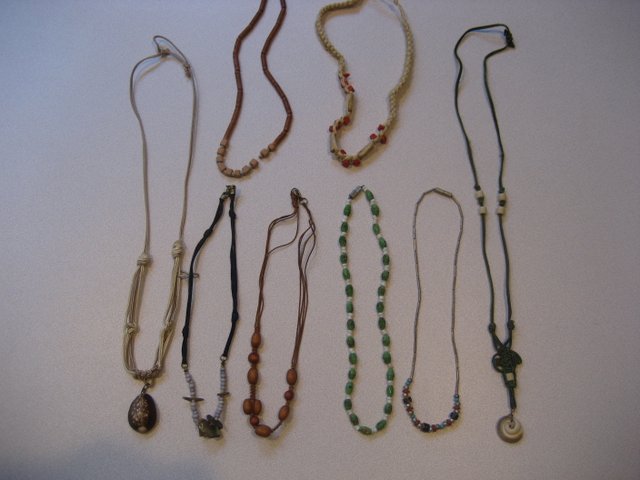
Retro 1970s choker necklaces.


A cobra car insignia that may or may not be a Shelby Cobra insignia.


Ladies' handkerchiefs. Perfect for crafting.

Donvier Ice Cream maker, with instruction/recipe book

Vinyl (record albums)  from the 60s and 70s. No guarantee on the condition.


Novels by local author, set in Framingham